
Around 45% of the population suffer with a food allergy or intolerance. The ingredients we hear about most are Wheat, Milk, Gluten, Egg and Yeast. Supermarkets already cater for these their “Free From” ranges of foods. In December 2005 labelling laws ruled that all food products had to have the top 14 allergens listed. Unfortunately tomato allergy is not one of them.
GP’s do not always do allergy training. It can be a battle getting a referral to see an allergist. when you have life threatening problems, there are few clinics and waiting lists can be months. Food Intolerance was not recognised on the NHS until recently. There is still no official method of testing. Use of a food diary followed by referral to a dietician who has an interest in intolerance is a good route to take. They will be able to help plan a food elimination diet to suit your requirements.
So what about tomatoes and these nightshades?
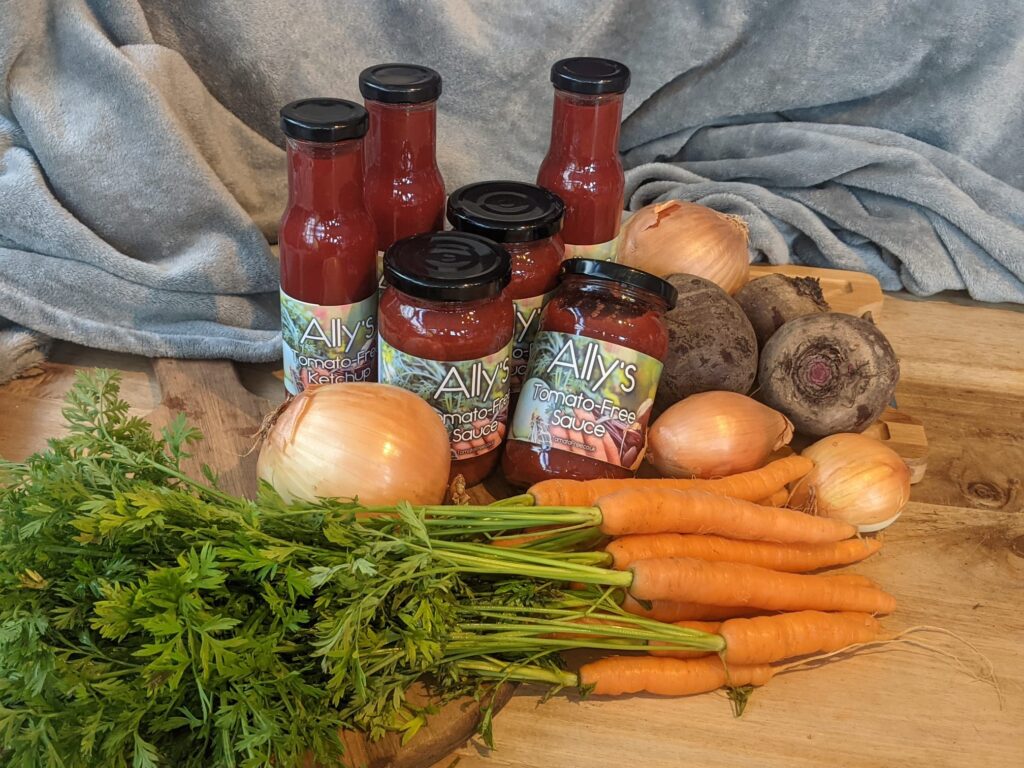
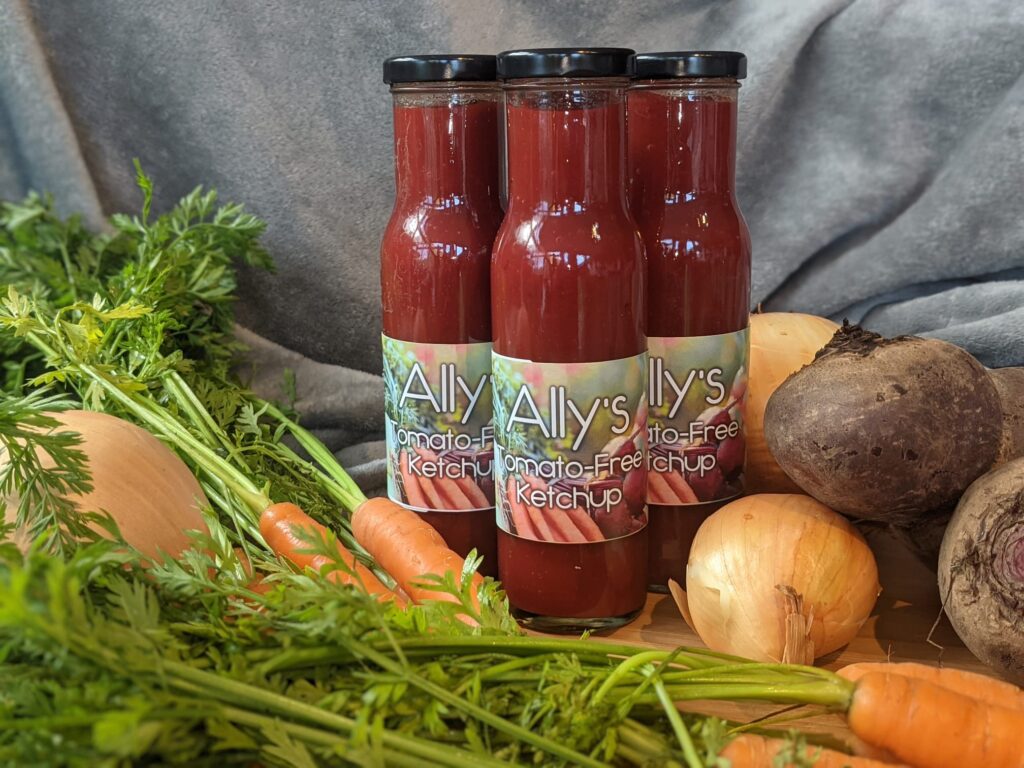
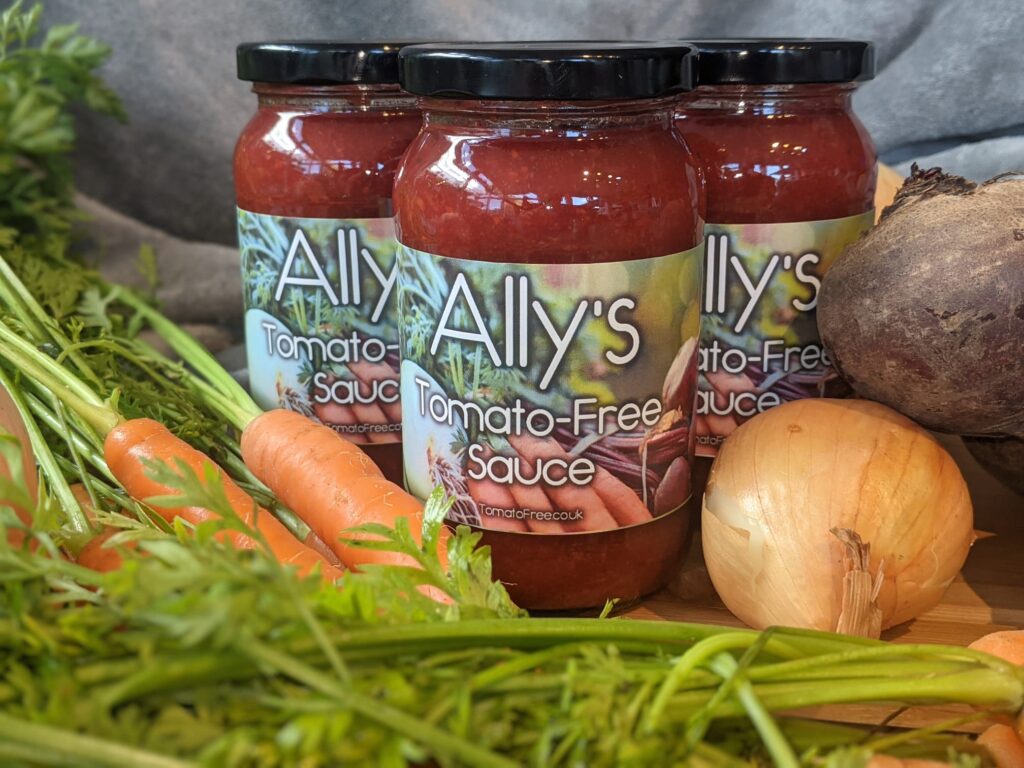
Our tomato free sauces have been specially formulated for people who choose to exclude tomatoes (or all nightshades) from their diet for positive health reasons. All nightshades contain solanine in some form, named as solanine (potatoes), tomatine (tomatoes), alpha-solanine (aubergine) or solanadine (chillies and peppers). They also contain nicotine in small amounts. Nicotine has a synergistic action with solanine as it stimulates the production of acetylcholine (whereas solanine inhibits it). This means that some people may be specifically allergic to tomatoes, but fine with other nightshades.
Nightshade plants include tomatoes, potatoes, aubergines, chilli peppers, tobacco and of course the deadly nightshade Atropa Belladona.
There are groups of people who cannot tolerate nightshades in their diets, choosing to avoid them. Eliminating nightshades helps alleviate a variety of problems (including mental, emotional and physical). The following groups of people may benefit from avoiding nightshades:
Who could benefit from avoiding nightshades?
- PEOPLE WITH ARTHRITIS. Some researchers believe that joint aches and swelling arising from consumption of nightshades is misdiagnosed as arthritis. One in three arthritics react badly to nightshades. These individuals frequently have a sensitivity to the solanine chemicals present in these foods. It can take up to six months of exclusion of nightshades from the diet to achieve a beneficial effect. Lupus and Still’s disease are sometimes associated with eating tomatoes.
- MACROBIOTICS – since the 1960s, the macrobiotic diet has recommended avoidance of all nightshades. Celebrities such as Sadie Frost, Gwyneth Paltrow, Chris Martin of Coldplay and Madonna follow this proven diet for health and longevity.
- CHILDREN WITH ECZEMA – for some children the elimination of nightshades from the diet helps clear eczema, particularly around the mouth.
- GASTRO ESOPHOGAL REFLUX DISEASE. Consumption of nightshade vegetables, particularly tomatoes, can causes a reaction where the stomach contents are pushed back up the oesophagus towards the throat. Symptoms of heartburn, chest pain, choking while lying down and asthma when sleeping.
- THOSE QUITTING SMOKING – some programmes to help people give up cigarettes also recommend giving up nightshade foods in order to completely eliminate low level nicotine intake and consequent re-addiction.
- BLOOD GROUP DIET – Dr. Peter d’Adamo’s Blood Type Diet recommends people of blood types A and B to avoid all nightshade foods. This represents about half the population of most European countries.
- CYSTITIS, LUPUS, PSORIASIS– giving up nightshades can help relieve symptoms of cystitis, lupus and psoriasis.
Tomatoes and tomato allergy
Tomatoes in particular contain a high degree of a natural chemical known as salicylate which is related to aspirin and is a derivative of salicylic acid. Some people can not tolerate any amount of salicylate in their diet.
Salicylates can be one cause of allergic reactions to tomatoes. It is important to differentiate between food intolerance and food allergy only in that a full allergy can be fatal whereas intolerance is not. Some people may say that intolerance will present with just mild symptoms, although some sufferers will disagree. Symptoms can include very painful cramps and abdominal contractions, often followed by diarrhoea. Both of which can last for many hours following consumption, therefore disrupting your normal daily routine. As the symptoms are not life threatening, the medical profession often regard them as mild and tend to disregard them altogether leaving the sufferer to fend for themselves. Immediate tomato allergy can be fatal at times causing anaphylactic shock. Symptoms of immediate allergy include tingling lips, swelling face, urticaria (hives), tightening of the chest, difficulty breathing etc.
Tomato allergy can occur in different ways among different people. Some are only allergic to raw tomatoes while others are also allergic to tomatoes in processed food like canned tomato, jam, sauce, pickle, etc.
– Tomatoes were first brought to Europe from Mexico by Cortez and were first cultivated for food in Naples. The British regarded them as poisonous until the 1700s. They contain a powerful form of Solanine called Tomatine which is an acetylcholinesterase inhibitor.
So what is solanine, the active alkaloid in nightshades? What are its effects?
What are Acetylcholinesterase Inhibitors?
- The chemical that transmits nerve impulses from one nerve ending to the next is acetylcholine. Once it has transmitted a nerve impulse it has done its job and no longer needed. Acetylcholinesterase enzyme breaks down by the acetylcholinesterase enzyme. What is left is recycled.
- Solanine (or tomatine from tomatoes) slows the production of acetylcholinesterase. So acetylcholine isn’t broken down as fast as it is produced.
- Acetylcholine builds up causing a ‘traffic jam’ of stimulation at the receptor nerve endings.
- The nerve endings become overstimulated.
- This overstimulation can lead to muscle weakness, muscle twitching, hypertension, increased intestinal contractions (causing pain, physical discomfort and diarrhoea) and increased secretions of tear, sweat, saliva, gastric and intestinal glands.
- All nightshade foods contain solanine, a strong acetylcholinesterase inhibitor. This is what makes excessive consumption of nightshade foods unsuitable for many people.
- Certain pesticides, particularly organophosphate and carbamates, work as acetylcholinesterase inhibitors, achieving the same effect as solanine.
There is evidence that for a diet that seeks to maintain a healthy nervous, the safest approach is to avoid nightshade vegetables and to eat organic. Nicotine was a widely used insecticide before the discovery of Organophosphates. It kills insects in the same way, but chemical sprays are cheaper and longer-lasting. Livestock farmers used Organophosphates as growth-promoters until they were replaced by hormones and antibiotics. The mechanism where muscle weakness and increase secretions of digestive fluids causes animals to exercise less and eat more. Thus fattening them up more quickly.
Why do people love Nightshades?
What is it that makes tobacco so addictive? Why is it that sometimes only chips will do, or we are hankering for a pizza? Solanine, by inhibiting the breakdown of acetylcholine, stimulates increased activity of the acetylcholine receptors in the brain and this leads to increased flow of adrenaline. This increases the heart rate, blood pressure and leads to increased blood glucose levels. This gives a reduced nervous sensitivity and mild increase in energy; producing a combination of calmness and stimulation. This provides short term relief in the face of the stresses and pressures of modern life. Long term overstimulation of these receptors puts a strain on the nervous system.
Always seek medical advice if unsure.
The websites that come recommended by us are:
www.anaphylaxis.org.uk– The Anaphylaxis Campaign
www.bsaci.org – The British Society for Allergy and Clinical Immunology
www.allergyuk.org – The leading national charity dedicated to supporting those with allergies
These sites have very good downloadable leaflets relavent to tomato allergy for parents to read and use.

[…] […]
I came across your site while searching for more information about some symptoms my son is having. The article pointed me in the right direction and I feel a little bit less stressed after reading. Keep up the good work. I’m going to bookmark the site and look forward to reading more articles.
[…] in the body may also lead to the build up of toxins and histamine which can mimic the symptoms of a tomato allergy. So what are the symptoms? Tomato intolerance is rarely harmful but can cause very unpleasant […]
[…] […]
Lovely site, It took 2 1/2 years of constant mouth ulcers (8+ on average every day) before someone suggested it may be a tomato intolerance. I cut out tomatoes, and hey-presto, no more mouth ulcers. I still get caught out sometimes as tomatoes are used in the preparation of some unlikely foods, but nice to see I’m not alone.
Thanks for the website.
Cheers,
Sharon
Two years ago I was diagnosed with an allergy to tomatoes and lemon by a blood test. I do not get any itching or swelling but have very bad stomach cramps and diahrrea. Don’t be told that you don’t have an allergy because you aren’t itching or swelling up. Always have a blood test through the hospital to confirm if it’s an intolerance or allergy.
Yay, i’ve been allergic since 2000 and have been pulling my hair out trying to find a replacement fot the nomato that Soma have stopped producing. here’s to pizza again 🙂
Thank you for your helpful website, I have been unable to tolerate any of the nightshade family since the age of 13, with severe abdominal pain and memory loss/ delusions if I get caught out.. Strangely enough, my pupils refuse to dilate too, so I have to wear sunglasses. Yet it is amazing how many of my friends find it funny! 🙂 It’s nice to realise I’m not the only sufferer!
Thanks, Nic
WOW never thought I would ever find a site that done (edit) No-Tomato sauce, probably cause I never looked.
it’s great to see im not alone as most people think im making a fuss over nothing. I wish all the major food retailers would look it up and help promote your products and maybe even stop adding tomato puree to everything that comes as convenient and fast food. keep up the good work.
I am so glad to know that I am not alone in this.I have recently discovered I have a tomato allergy.Been eating them all my life.I have had hives and rashes and such,but never put it to tomatoes.Now I know after a trip to the dr.So glad to find some tomato alternatives.Thank you so much.
Thank you so much for this site.I have ate tomatoes all my life.I have had rashes,hives,sores from scratching.But did I ever think I was allergic to a tomato?No.Well we planted a garden this year and I got a sever case of hives and rashes.Had to go to Dr.Got epinepherine shot,steroid shot,and a couple of other pills.Left with prednisone,zantac and zyrtec.Now I have to avoid tomatoes and you really don’t pay attention to tomatoes in foods until you can’t have them.I love ketchup.Now I have to find substitutes for ketchup,pizza sauce and spaghetti sauce.This site is such a big help to me.Thank you again.
thanks so much for this site. when i was 17 i got really sick had a high fever was really weak tired and had bruises all over me. i had been eating tomatoes sincei was born. i have looked in vain to find out what happened to me then and couldnt find any reason. the drs didnt even know what was wrong but told me to never take anything containing asprin again cause of how low my blood levels were. a few months later i got really sick again this time without the bruises and high fever and they still couldnt tell me the culprit. after i turned 18 i had made my killer speghetti and sat down to a nice bowl when my hands started itching and my lips and toungue started to tingle. i went to the dr and they finally told me tomatos was the culprit. i now have to check everything i eat. i cant even have tomato powder like you find in bbq chips. i have avoided them like the plague ever since. i cant touch them or eat them. if i go out to eat i have to specify the allergy and make sure they understand that if they touched tomato or ketchup with their hands they have to change gloves and unfortunantly i know immediatly if they didnt listen. this site has finally explined alot for me i never thought to look for an alternitive way to cook things like chili which i have done without for years. this site is amazing. and once again i thank you.
Yes, I have it too although it is perhaps better described as an intolerance than an allergy. It is not life threatening, and usually only results in diarrea or vomiting if I intadvertently consume tomato. Unpleasant yes. Life threatening no.
I always have to carefully examine the ingredients list of any food product I buy, and my eyesight is somtimes not up to reading the minute print. There are those who cannot understand that I cannot eat things like pizza or chilli con carne. Tomato is in so many foods, baked beans for example. Ready meals in supermarkets seem to nearly always contain tomato. It is hard to find one that doesn’t. I love curries, but I have to make them myself, to ensure thay contain no tomato.
I don’t seem to have the same problem with other nightshades like potato and chilli.
Thank you my Daughter suffers with Acid Reflux and Tomatoes are one of the things to avoid and she loves all the foods that contain them so to find this site and I have ordered the no tomatoe sause Hope she likes it and again thank you for this site from Christine Davis
I tried to avoid tomatoes as a kid. Always hated them. Continued disliking and mostly avoiding them into adulthood. In my mid 20’s I started to force myself to eat them for health (all that lycopene!) I developed a tomato sauce recipe I – and everyone else – loved. (Still, could never eat them raw, just hated the taste). Started to develop allergy symptoms what seemed randomly. Sneezing, runny nose, awful headache, and then diarrhea the next day. Took me a long time, as my symptoms worsened, to figure out it was the tomatoes! (Had never heard of tomato allergy or intolerance. Thought it must have been the dairy, then the pasta, then I blamed my new shampoo… Slowly cut a lot out before I thought, “could it be the tomato sauce?”). Good thing I guessed it because my symptoms were getting worse (more severe) with each bout. Now, I have to avoid all tomato all the time. Even a little gives me a reaction. There are tomatoes in a lot of Indian dishes, and of course pizzas, pastas, Mexican/salsas, etc. Thank you for posting about this little known problem.
Wow this is fantastic, I just found out today that my daughter is highly allergic to tomoatos, she has been coverd in hives and problems breathing after having anything with them in. I been worried all day about how to let her have the things she enjoys, and you just gave me the answer thank you 🙂
I’ve been allergic to tomato after getting gastroenteritis 5 years ago(could have been them in the first place?!) And was never a massive fan of evil toms either.
Came across loads of sites on how to make a sauce but some times life too hectic to make it from scratch…found Nomato which is now no longer made, then your web site came up as an advert on the bottom of the search site and hurrah you’re UK based!!!!
You have saved my partner to my whingeing and whining about not being able to eat his fave dishes and the absolutely horrific side affects if I do!!! Will be placing an order ASAP! Shame about the postage cost tho 🙁
Thanks!!!
I came across your site while searching for inspiration for something new to eat, I am 26 and have always been allergic to tomato. As you can understand going out for dinner is near on impossible (dining abroad is always the hardest having to learn Allergy in every language). I am definitely going to give your site a thorough reading for inspiration.
Thanks for offering information on such a little known problem, I think I will point colleagues and friends to your site to view as they don’t take my allergy seriously and continue to eat tomatoes at their desks and try to feed me food with them in stating they are cooked (you wouldn’t say that to a nut allergy sufferer).
I have had a tomato allergy since I was a child. Like a previous poster Sharon I get huge mouth ulcers and blisters in my eyes. It also gives me stomach ache and my throat starts to close. I really miss some foods that need tomatos in so love your site
Very useful site. I have been tomato allergic/intolerant since childhood but am perfectly OK with potatoes and peppers etc. An allergies doctor I spoke to told me that probably up to 40% of males may be tomato allergic and that it is likely to be the Saturday night pizza, not just the beer that causes young men to vomit.
My big gripe for some years now has been that virtually every ready-made food product, pies, soups, sauces, ready to serve meals now contain tomato or tomato products. M&S is absolutely the worst even their chicken pies and mushroom soups contain tomato puree I just do not shop there anymore. OK, so since I retired I now prepare all my own food at home which is great but it would be nice just to have a bought in pie for a change or vegetable soup for lunch that I haven’t had to make and freeze.
The big nightmare is of course eating out when often even the restaurant staff do not know the exact ingredients of a dish, or worse still being invited out to lunch or dinner with casual aquaintances and not knowing where the host/hostess has bought the food or what they have put into it.
I welcome any effort to make the public and manufacturers of food aware of his very life-style limiting allergy.
I have had an allergy to tomatoes for many years, itches and swelling to my lips, reflux problems, I did not know what to do, I came across this web site by accident, I’m so glad that I did, the sauces are great, I’m able to make many receipes now.
Thank you.
Regards
Jan J
So glad to have found this site. Tomato is one of the triggers i have discovered for very severe migraine i have suffered from for over 12 years. Like another writer i find it very hard to eat out. Even in the best restaurants, when you say, no tomatoes, surprisingly they still include them somewhere. My Husband gets quite cross and has started to say I am allergic to them now even though technically I am not.
Yes I found this out I got a sandwich from sainsbury which had tomatoes in but no mention on the label complained to sainsbury they stopped selling it with tomatoes in so some do listen to feed back. Tony
Hello!!
Been tearing my hair out as after 6 months of face rashes, loose stools and what I thought were colds in my 18 month old son, we have finally realised he has a tomato intolerance/allergy. Feel so guilty as it never crossed my mind, I have never heard of it tbh! Done a fortnight of trying to cook without and going demented but stumbled upon you today and feel joyous that we can go back to some normality with our meals rather than me having to cook separately for him & my daughter.
Thank you so much for this site and your product. I can’t wait for it to arrive to try it. X x x
Glad I found this website. I have 17 year old with early onset schizophrenia who cannot tolerate cooked tomatoes. We found out after doing research on what we could do to help on top of the anti-psychotics. I noticed that he was still taking his medication but he still had a lot of anxiety. I kept noticing that his anxiety would come on strong after he would eat certain foods. With this his delusions worsen. So we eliminated gluten and milk. Then we noticed cooked tomatoes were setting him off. Not only that but sugar. Sugar is in everything! Just this weekend we figured out he can eat Fingerling potatoes. From what I read they have very little starch. He can’t do red bell peppers too. With everything we have found his doctors still don’t think dietary changes will help. I’m still looking for someone to believe me. Good luck to everyone.